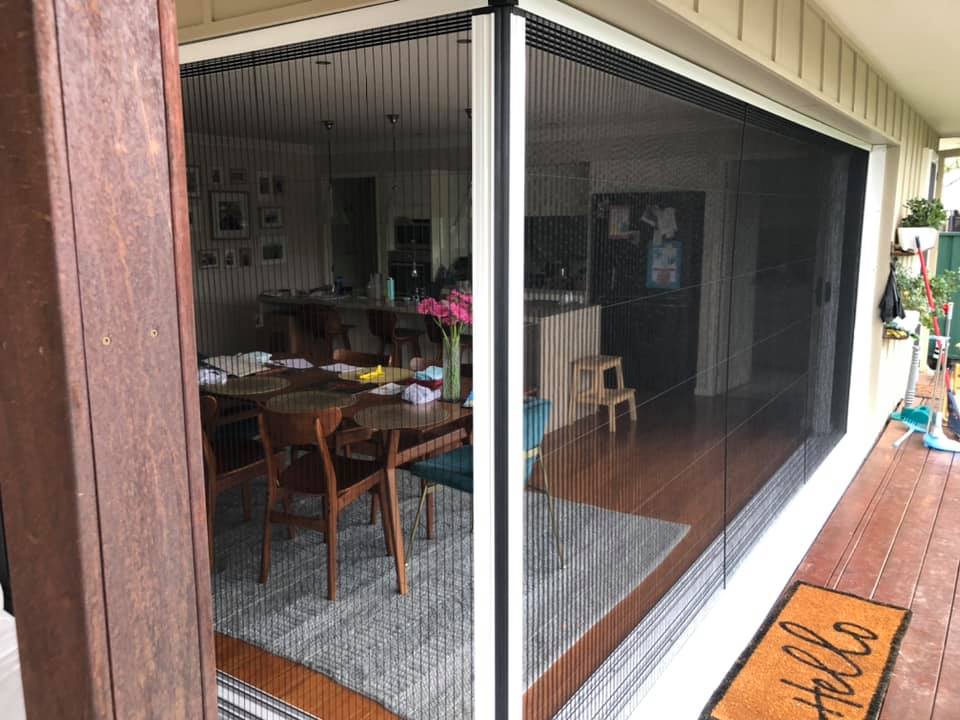
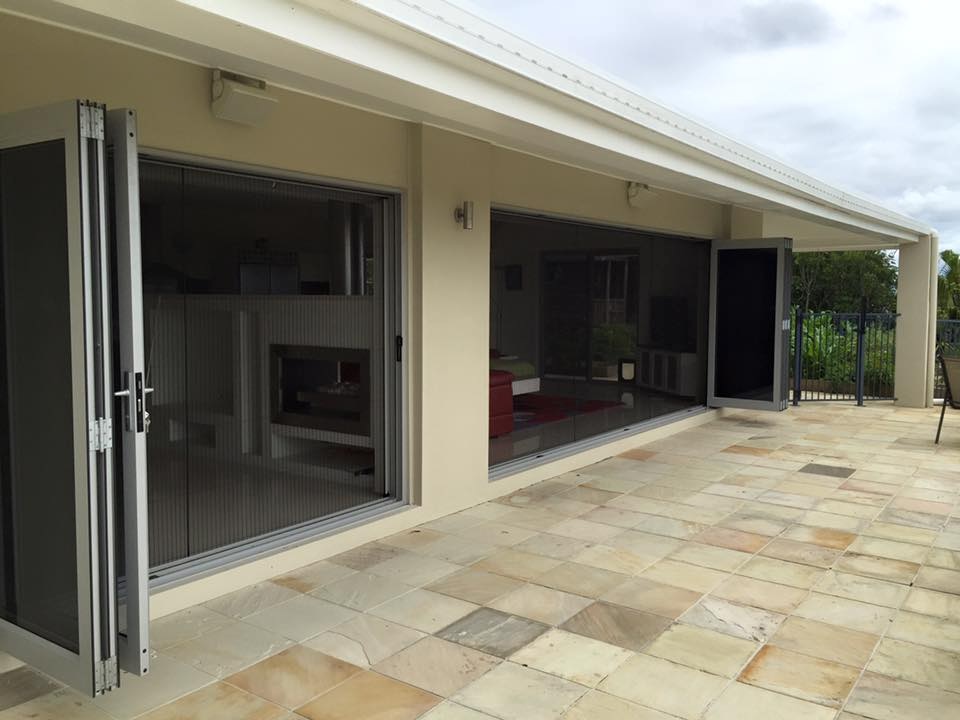
Bifold Fly Screens: What’s Best Approach?
Living in Queensland with bifold doors is like having a beautiful sports car you can’t drive. The Williams family in Brisbane perfectly summed up this frustration – they’d invested in stunning 4-metre bifold doors that opened their living area to an incredible outdoor entertaining space, but those doors stayed firmly closed most evenings because of mossies and March flies.
Here’s the thing about bifold doors – they’re absolutely brilliant for our climate, but they create unique challenges when it comes to fly screening. You can’t just slap a standard screen on a 3, 4, or 5-metre opening and expect it to work properly. That’s where specialised bifold fly screens come into their own.
I’ve been helping Queensland homeowners solve this exact problem for over a decade, and honestly, it’s one of the most satisfying transformations to witness. When you get bifold fly screens right, you’re not just adding insect protection – you’re unlocking the full potential of indoor-outdoor living that our climate makes possible.
Why Bifold Doors Need Specialised Fly Screens
Look, I’ll be blunt about this – standard screening solutions simply don’t work for bifold door configurations. I’ve seen too many homeowners try to adapt regular screens to bifold doors, and it never ends well.
The engineering requirements are completely different when you’re dealing with wide spans. A 4-metre opening places entirely different structural demands on screening systems compared to a standard single door. What seems like it should be straightforward becomes genuinely complex when you factor in wind loads, daily operation, and long-term durability.
Multi-panel doors create their own operational challenges too. The way bifold doors stack and fold means your screening solution needs to work harmoniously with that movement rather than fighting against it. I’ve seen installations where homeowners had to choose between using their doors properly or having effective screening – that’s not really a choice anyone should have to make.
Then there’s the aesthetic consideration. With larger openings, any screening solution becomes much more visible and prominent in your home’s design. What might be barely noticeable on a standard door becomes a major visual element with bifold configurations.
The reality is that bifold fly screens require specialist knowledge and purpose-built solutions. It’s honestly not something you can wing or adapt from other applications.
Ready to solve your bifold door screening challenge? Contact us for expert advice at https://intelliscreens.com.au/#quote-request-hp-sec or call 07 5593 8882 to discuss your specific setup.
Single Span vs Multi-Panel Bifold Fly Screen Solutions
Here’s where things get interesting – understanding your options makes all the difference in choosing the right approach for your specific bifold setup.
Single span screens work brilliantly for openings up to 5 metres. The Johnsons on the Gold Coast were genuinely amazed that their 6-metre opening could be effectively screened with just two panels working together. They’d assumed they’d need some complicated multi-section system, but the engineering was actually more elegant than they’d expected.
For smaller bifold configurations – say 3 to 4 metres – a single span retractable screen often provides the cleanest, most user-friendly solution. The screen retracts completely to one side, giving you full access to your bifold door’s functionality without any compromise.
Double screen systems become necessary for those really impressive wide openings. What I love about modern engineering is how smoothly these systems can operate even across large spans. Each screen covers part of the opening, and when both are retracted, you’ve got completely unobstructed access to your outdoor space.
The choice between retractable and fixed screening options often comes down to how you actually use your bifold doors. Families who open and close their doors multiple times daily typically prefer retractable systems for the flexibility. Those who tend to keep doors open for extended periods might find fixed screens more practical.
It’s worth noting that the structural requirements change significantly with span width. Longer spans need more robust mounting systems and higher-quality components to maintain smooth operation over time.
Installation Considerations for Bifold Fly Screens
This is where I see most DIY attempts fall apart – the installation requirements for bifold fly screens are genuinely more complex than people anticipate.
One disaster I’ll never forget involved a 4-metre screen that was sagging within weeks because the mounting wasn’t properly engineered for the span. The homeowner had assumed standard wall brackets would suffice, but wide span screens require specific structural support to maintain proper tension and alignment.
Integration with existing door frames and architecture requires real expertise. Every bifold installation I’ve encountered has its own quirks – slightly different frame profiles, unique architectural details, or specific structural considerations that affect how screening can be mounted.
Floor track considerations are particularly important with bifold configurations. Traditional floor tracks can interfere with the folding mechanism or create trip hazards across wide openings. That’s where innovations like Smart Track™ systems become genuinely valuable – the track retracts when not in use, leaving only a 4mm guide sitting on the floor.
The relationship between your bifold doors and the screening system needs to be carefully planned. Poor installation can actually interfere with your doors’ operation or create maintenance issues down the track.
Professional installation isn’t just recommended for bifold fly screens – it’s honestly essential if you want the system to work properly long-term.
Aesthetic Integration: Making Bifold Fly Screens Invisible
The best bifold fly screens are the ones you barely notice when they’re in use and completely forget about when they’re retracted.
An architect client initially worried that screens would completely ruin his award-winning minimalist design. He’d worked so hard to create clean, uninterrupted lines with his bifold door installation that any screening seemed like a compromise. But you know what happened when he saw how invisible modern bifold fly screens could be? He started incorporating them into all his designs.
Colour matching options have become remarkably sophisticated. Whether you’ve got powder-coated aluminium frames, natural timber finishes, or contemporary charcoal tones, there’s probably a perfect match available. The goal is seamless integration rather than obvious addition.
Slim profile designs complement modern architecture rather than fighting against it. When retracted, quality bifold fly screens virtually disappear into their housing, leaving your architectural vision completely intact.
What I particularly appreciate about well-designed systems is how they don’t interfere with your bifold doors’ functionality. The screening should feel like a natural extension of your door system rather than something that’s been added afterwards.
Interested in seeing how bifold fly screens can enhance rather than compromise your home’s aesthetics? Get your personalised quote at https://intelliscreens.com.au/#quote-request-hp-sec or call our design team on 07 5593 8882.
Operational Excellence: What Makes Bifold Fly Screens Work Long-term
Quality components and proper engineering determine whether your bifold fly screens will still be working smoothly in five years’ time.
Mrs Patterson’s 85-year-old mother operates their 5-metre bifold screen effortlessly – that’s when you know the engineering is genuinely right. The mechanism needs to be light enough for elderly family members while robust enough to handle daily use across wide spans.
Smooth gliding mechanisms are absolutely critical for bifold applications. With the larger forces involved in wide span screens, any friction or binding in the system becomes magnified. Quality systems use precision-engineered tracks and components that maintain smooth operation even after thousands of cycles.
Durability testing for Australian conditions makes a real difference to long-term performance. Our climate places specific demands on materials and mechanisms – UV exposure, temperature cycling, coastal salt air, and seasonal weather extremes all affect how screening systems age.
The 5-year warranty backing quality bifold fly screens isn’t just marketing – it reflects genuine confidence in the engineering and materials. When manufacturers are willing to back their products for that long, it usually means they’ve done the development work properly.
What strikes me most about well-engineered systems is how they maintain their performance characteristics over time. Cheap alternatives might work adequately initially, but they often develop operational problems or require frequent adjustment as components wear.
Choosing Your Bifold Fly Screen Solution
Professional assessment becomes absolutely essential when you’re dealing with bifold door configurations because there genuinely isn’t a one-size-fits-all solution.
Every bifold installation I’ve encountered has unique characteristics that affect screening options. Frame profiles, structural mounting points, door operation patterns, and architectural integration requirements all influence what approach will work best.
Different bifold configurations require completely different screening strategies. A 3-panel door setup presents different challenges compared to a 5-panel system, and corner configurations create their own unique requirements.
Local expertise makes an enormous difference when you’re dealing with Queensland building conditions. Our climate, construction methods, and architectural styles all influence how bifold fly screens should be specified and installed.
Custom solutions often become necessary for unique architectural challenges. Standard products work well for typical installations, but distinctive homes or unusual configurations might require bespoke approaches.
The consultation process should include assessment of how you actually use your bifold doors. Families who entertain frequently have different priorities compared to those who primarily use their doors for daily indoor-outdoor flow.
What I always tell clients is that the upfront investment in proper assessment and quality installation pays dividends in long-term satisfaction and performance.
Your Bifold Door Transformation
At the end of the day, the right bifold fly screens solution transforms previously unusable openings into genuine extensions of your living space.
I’ve watched families completely change how they use their homes once their bifold doors become practically usable rather than just architecturally impressive. Those stunning wide openings finally deliver on their promise of seamless indoor-outdoor living.
The key considerations we’ve covered – span requirements, installation complexity, aesthetic integration, operational quality, and professional assessment – all contribute to getting a result that genuinely enhances your lifestyle rather than creating new complications.
This is honestly an investment in both property value and daily enjoyment. Quality bifold fly screens don’t just solve the insect problem – they unlock the full potential of what bifold doors can offer in our Queensland climate.
The families I work with consistently tell me that getting their bifold screening right was transformative for how they experience their homes. Those beautiful openings finally become practical, usable spaces rather than architectural features you admire from indoors.
Ready to transform your bifold doors from beautiful but impractical to the heart of your indoor-outdoor living? Contact us for your personalised assessment at https://intelliscreens.com.au/#quote-request-hp-sec or call us on 07 5593 8882. Let’s discuss the best bifold fly screens approach for your specific situation.
FAQ’s
Question: Why are traditional fly screens not suitable for bifold doors? Answer: Traditional hinged or sliding fly screens are not suitable for the wide, uninterrupted openings of bifold doors. They obstruct the view, disrupt the seamless flow, and interfere with the folding mechanism of the doors themselves.
Question: What is the best fly screen solution for bifold doors? Answer: The best and most popular solution is a retractable fly screen. These screens pull out to cover the opening when needed and retract into a discreet cassette when not in use, preserving the aesthetic and functionality of your bifold doors.
Question: Can retractable screens cover very large bifold door openings? Answer: Yes, high-quality retractable fly screens can be custom-made to span very large openings. For exceptionally wide spaces, two screens can be installed to meet in the middle, providing a seamless and effective barrier against insects.
The post Bifold Fly Screens: What’s The Best Approach? appeared first on IntelliScreens.
from
https://intelliscreens.com.au/bifold-fly-screens-whats-the-best-approach/?utm_source=rss&utm_medium=rss&utm_campaign=bifold-fly-screens-whats-the-best-approach
from
https://intelliscreens0.blogspot.com/2025/08/bifold-fly-screens-whats-best-approach.html
from
https://lucilecrawford.blogspot.com/2025/08/bifold-fly-screens-whats-best-approach.html